The Beatles

“BEATLES ’64” A TOOL FOR COOLING DOWN TODAY’S TOXIC MASCULINITY

By Ken Sheetz

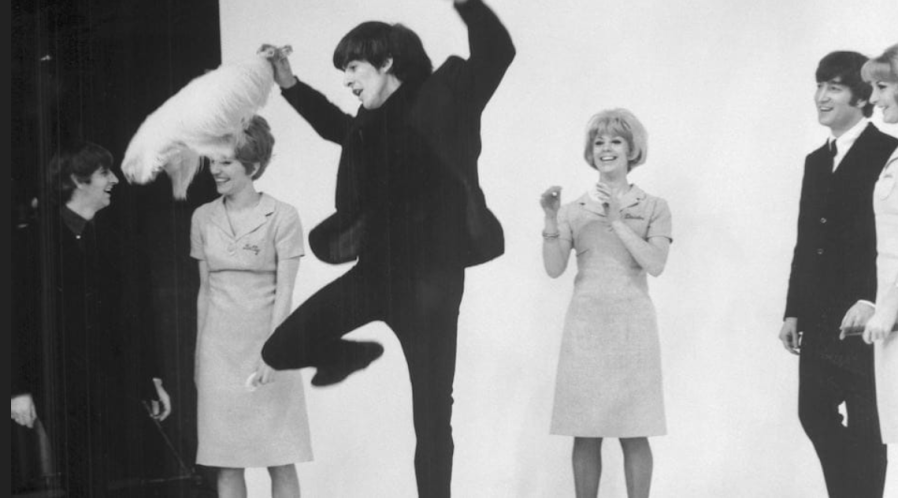
Few cultural moments resonate as powerfully as the Beatles’ arrival in an America — one that was still grieving the tragic end of JFK’s Camelot — and the new documentary BEATLES ’64 masterfully captures their seismic impact and the release of a new love based era. Directed by Paul Crowder and produced by Martin Scorsese, the film takes viewers back to 1964, when John, Paul, George, and Ringo made their U.S. debut, transforming not just music but toxic masculinity.

As someone who was 12 when Beatlemania erupted, screaming teens and all,, watching this film was like stepping into a time machine. I vividly remember my mom’s reaction to the Beatles—especially Ringo Starr, whose mop-top hair and quirky persona unsettled her enough to make me promise never to grow my hair long. (Spoiler: I didn’t keep that promise.) What the film captures so well is how the Beatles’ charm, humor, and authenticity ultimately won over even their skeptics, including my mom.

One of the most fascinating themes the film explores is how the Beatles challenged traditional notions of masculinity. In a time when stoic machismo dominated cultural ideals, they brought something radically different. The documentary draws compelling contrasts between the Beatles and the “macho man” archetypes of the day, like Frank Sinatra and other leading figures. The Beatles weren’t afraid to show affection for one another, express vulnerability in their music, or embrace flamboyant fashion. They paved the way for a softer, more creative vision of masculinity, and it resonated deeply with a generation ready for change.

The rare behind-the-scenes footage is a standout feature, offering a glimpse of the Beatles as both global icons and four young men navigating an unprecedented whirlwind of fame. The film also shines in its recreation of the Ed Sullivan Show performance, viewed by over 73 million people—a cultural tipping point that cemented their place in history.

BEATLES ’64 doesn’t just celebrate the music—it illuminates the broader cultural transformation sparked by the Fab Four. Their rise to global superstardom wasn’t just about catchy tunes; it was about challenging norms, opening minds, and redefining what it means to be a man.

As I watched the show after post-Thanksgiving with my love Elizabeth, 8 years younger and so she had memory of the Beatles blast-off firsthand, we both couldn’t help but think about how much we could learn from the Beatles’ example today. They showed us how to reject toxic masculinity in favor of kindness, humor, creativity, and emotional vulnerability.

5 stars for BEATLES ’64 and the telling of 4 lovable lads from Liverpool and the healing their conscious raising music that brought America out of mourning.

⭐️⭐️⭐️⭐️⭐️

“Barbarella” (1968) – A Sci-Fi Classic That Takes You Far, Far Away from Today’s Formulaic Marvel Flicks.

If you’re feeling exhausted by today’s insane hate soaked 2024 elections and looking for break that is sexy galaxy far, far away from the Disney assembly line of Marvel movies, with their predictable plot twists, sky beams, and post-credits scenes, then Barbarella is the cosmic escape you didn’t know you needed. This 1968 space romp, directed by Roger Vadim and starring the unforgettable Jane Fonda, isn’t just a movie—it’s a neon, glittering trip through a galaxy of pure kitsch, camp, and unfiltered imagination.

From the very first scene, where Barbarella peels out of a zero-gravity spacesuit in what can only be described as the slowest striptease in sci-fi history, you know you’re in for something spectacularly different. Forget saving the multiverse with a snap of the fingers—Barbarella is here to save the galaxy with pure sensuality and some questionable combat skills, all while lounging in the kind of futuristic fashion that makes today’s superheroes look downright bland.

The plot? Well, it’s as wild as you’d expect from the late ’60s. Barbarella is sent by the President of Earth to stop a mad scientist named Durand-Durand (no relation to the band…yet), who’s threatening universal peace with a weapon called the Positronic Ray. Along the way, she encounters angelic aliens, a labyrinth of sadistic toys, and a piano-like contraption designed to kill her with pleasure (yes, you read that right). It’s not so much a coherent narrative as it is a sequence of increasingly bizarre scenarios that make you go, “Wait, WHAT?”

What sets Barbarella apart from today’s superhero fare is how joyfully untethered it is from logic or self-seriousness. It doesn’t care about crafting a cinematic universe or tying up every loose end—it’s here to have fun, and you’re just along for the ride. Jane Fonda’s Barbarella is a refreshing heroine; she’s not burdened by dark backstories or moral dilemmas. She’s unabashedly curious, confident, and sexy, battling her foes with equal parts charm and clumsy enthusiasm.

And the visuals! Forget the hyper-CGI of Marvel’s latest epics—Barbarella offers a retro-futuristic aesthetic that’s delightfully handmade. The sets look like they were cobbled together in someone’s groovy living room, and the costumes are, well, the kind of thing you’d only expect to see on an intergalactic catwalk. Fonda’s wardrobe alone deserves its own cult following, from sparkly spacesuits to feathered headdresses that would make even Lady Gaga blush.

Sure, the dialogue is cheesy, and the special effects have aged like fine wine that’s turned to vinegar, but that’s all part of the charm. Barbarella revels in its campiness, a refreshing alternative to the overpolished, franchise-driven spectacles that dominate the box office today. It’s a movie that invites you to sit back, sip a martini (preferably with a cosmic twist), and let yourself get lost in a world where anything goes, and the rules of physics—and fashion—are delightfully flexible.

So if you’re tired of Marvel’s color-by-numbers storytelling and need a break from the endless parade of CGI brawls, take a trip with Barbarella. It’s an unapologetic blast from the past, reminding us that sometimes, the best way to escape reality is to embrace the absurd and the sexy, one sparkly space adventure at a time.

Visit our new PoliticalCoolDown.com page for much needed meditation breaks designed to help lower the temperature.

Tarantino’s ONCE UPON A TIME IN HOLLYWOOD Mines Hippie-Hate Gold

Join us for a look at the dirty secret behind this weekend’s $40 opening box office for ONCE UPON A TIME IN HOLLYWOOD. Warning: Spoilers ahead.

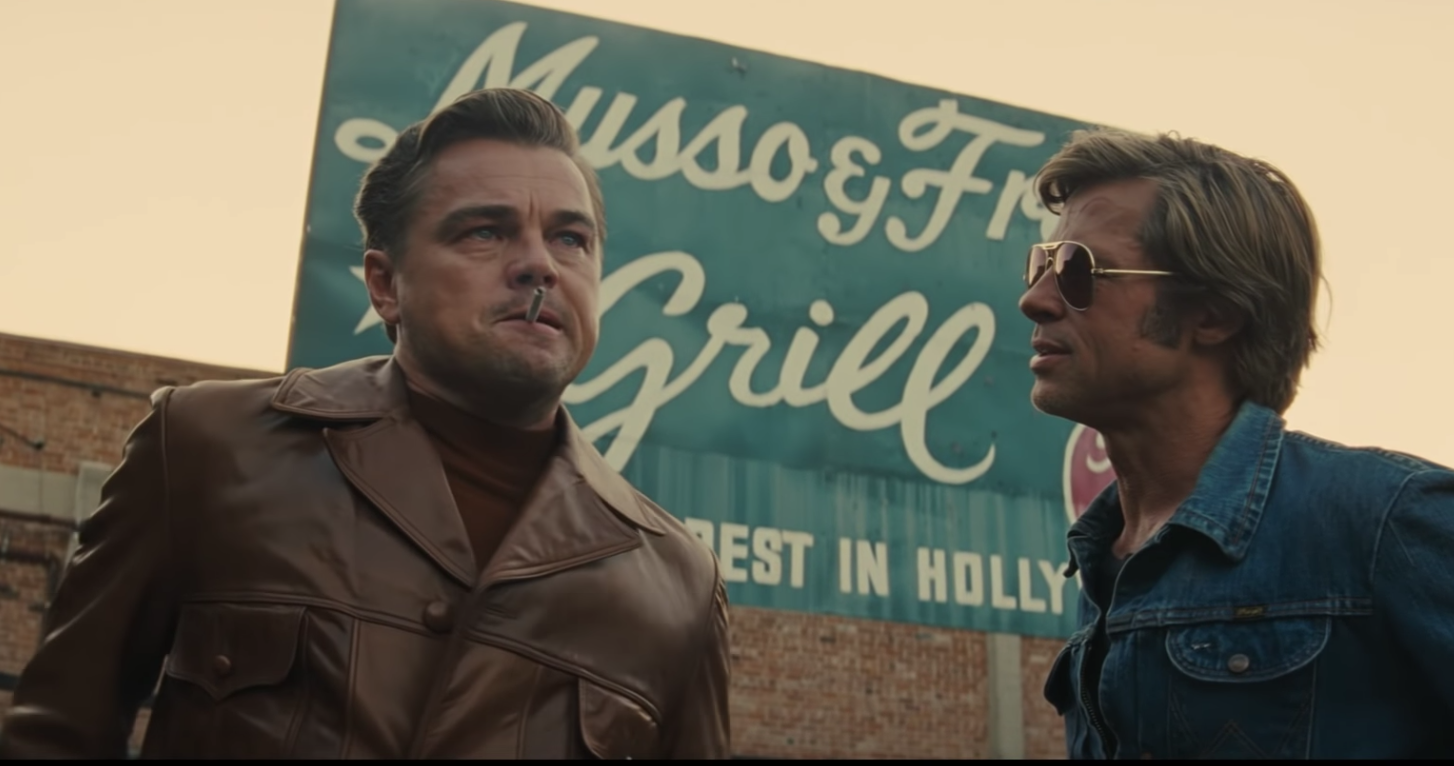
Screen Shot 2019-07-28 at 5.22.37 PM
Leonardo DiCaprio and Brad Pitt as Hippe Hater Heros in Tarantino’s ONCE UPON A TIME IN HOLLYWOOD

I’ve been a Quentin Tarantino fan since PULP FICTION. And I admit to taking some joy when the good guys lit up Hitler in the INGLORIOUS BASTARDS finale. But as an independent filmmaker of modest success this past 23 years and counting, albeit one who got started a too late in life at age 42 to make it big — Hollywood’s young person’s game, my friends — I have to say the unpredictable Tarantino has become, alas, as predictable with his history revisionist twist endings.

This time Tarantino feeds like a vampire on the Sharon Tate’s brutal murder and dreams of up a washed up Cowboy actor, played to perfection by Leonardo DiCaprio and his co-dependent as it gets stuntman, equally well played by Brad Pitt as Sharon’s savior from the Manson family.

Please, Quentin, if you ever read this review of a huge fan of yours depressed over the turn of your career, go back to making good noir films instead of being some kind celluloid timeline cop. What’s next for your film 10th? Uma Thurman kills Booth before he assassinates Lincoln? Samuel Jackson kills Lee Harvey Oswald from the grassy knoll to save JFK? Get back to making great stories about lowlife characters.

Now, if you were part of the establishment, AKA the Man, AKA today’s Matrix, in the 60s and 70s, you likely hated Hippies and maybe still do to this day if you have not become woke folk. I’d even go so far as to say ONCE UPON A TIME IN HOLLYWOOD was made specifically for liberal value haters, packaged in the form of Hippies.

Indeed, what’s painfully missing from Tarantino’s 9th film’s narrative is that Mason’s cult does not in any way genuinely represent the Hippie movement anymore than Nazis represent the German people. This makes the film an intoxicating ticket for conservatives and a brainwash for unsuspecting liberals who dig Tarantino. A win-win for the Trump era’s race bating, sexist, hate based politics.

And come on Brad Pitt, not cool you playing a character who got away with killing his wife and Leonardo as the ultimate wife killing enabler. I know Tarantino loves to study the underbelly of the world but unlike PULP FICTION where Samuel Jackson’s character experiences an awakening and mending of his wicked ways, there’s none of that in ONCE UPON A TIME IN HOLLYWOOD. Leaving the characters of Leo and Brad rendered as hopelessly sexist.

As life worked out I was, unlike my film career where I was a little too old, a little too young to be part of the Hippie movement. I was high schooler in the late 60s and a college student in early the 70s. By 1974 I was married at 22 in and having kids by the tender age of 27. Hippies were passe’ for me. I was busy being part of the Yuppie movement and became real estate millionaire who built a skyscraper and Oprah’s Harpo Studios by 38.

Tarantino, born in 1963, was all of six year old at the start of the death of Hippie movement that the Mason Family murders triggered, with some help making a connection not really there from the establishment media. Do the math, Tarantino missed the Hippie movement entirely when it gave way to the Yuppie movement by the time he was old enough to drive.

My bet is Tarantino’s only picked up on the Hippie vibe from old movies for the most part when he was a video store clerk with lots of free time on his hands. Or perhaps his parents used Hippies as some kind of parental scolding, “Do your homework, Quentin or you’ll end up a damned filthy Hippie!”

Tarantino’s connecting Hippie-hating to the most notorious commune leader, the Hippie Satan himself Charles Manson is frankly akin to making a movie about life in Oklahoma City with the heroes stopping right-wing Christian Timothy McVeigh’s bombing as a condemnation of Roman Catholics and vets.

So I say shame on Tarantino and Sony tapping into hate for liberal values of our current divided society and making a film bordering on a PSYOP.  ONCE UPON A TIME IN HOLLWYOOD with its all white main cast — aside from the fantasy of white guy Brad Pitt kicking  Bruce Lee’s ass — suffers from misguided Hippie hate and spoils an otherwise good movie. Even if this 9th film from Tarantino it does not come close to his mad story structure skills at his peak of 90s filmmaking.

Don’t buy my cynicism of this film as marketed to appeal to hatred for liberal values and the #metoo movement, a movement that snared Tarantino’s long time patron Harvey Weinstein? Go ahead and drive the AI that has you pigeonholed as liberal a headache and read this Breitbart review that raves about Tarantino’s “masterpiece” hating on Hippies and Wokesters.

With a $40 million take at the box office, hate targeted filmmaking has sadly become commercially viable. What will follow after the success of this film is scary as Hollywood is copycat industry.

Want to help me make an uplifting film that protests the horrific treatment of refugee kids at the border where the hero is a Republican/Christian social worker? Click this link to be whisked away to the crowd funder for SOAP & TOOTHBRUSHES.

My Totally Biased Film Review of THE FLANAGAN EXPERIMENTS – Theatrical Version

As some of you know, I am film producer/director when I am not meditating or blogging about meditating. And using a blend of those skills I like to review conscious film for its mainstream insights and mainstream films for conscious insights.

What I am getting at is I am about to make review of a new film THE FLANAGAN EXPERIMENTS that had its world premiere January 17, 2019 as a special screening of the Sedona Film Festival to a sold out crowd. A film, it so happens I directed, produced, edited, color corrected, SFXed, scored, etc. myself, with some great notes from my love and associate post producer Elizabeth England.

So heads up, I have huge blind spot in this review of my passion project about a subject, who over the 6 years it took to make this 5 star film (I’m biased remember?), would become one of my best clients and friends, Dr. Patrick Flanagan, alongside his love Stephanie Sutton. Here’s my totally biased review:

A 5 star must see! Patrick Flanagan lights up the screen in THE FLANAGAN EXPERIMENTS with a Tesla-like magnetism that makes science cool again. Longtime friend and admirer Deepak Chopra’s interview of Patrick frames this compilation of the best of 50 interviews that garnered over 25 million views on the web.

See? I told you I was biased.  But at the after party I did hear nothing but raves. Watch for and review the film yourself use promo code PHI when prompted to buy. But don’t wait too long to view. The promo code expires February 19th!


Three Billboards Outside Ebbing, Missouri

A movie whose message that anger begets more anger is so beautifully expressed it transcends its theme. I was deeply moved by this masterfully told human tragedy that has some hard won laughs at the absurdity of white male privaledge.

5 stars and the likely best actress Oscar wins for Frances McDormand, best supporting for Woody Harrelson and best actor for Sam Rockwell.

Highly recommended THREE BILLBOARDS OUTSIDE EBBING, MISSOURI as antidote to a Hollywood season filled with Hollywood remakes for dealing with actual human grief and rage and giving us a female hero in Frances’ Mildred willing to stand up to the world of men.